+91 98020 13010

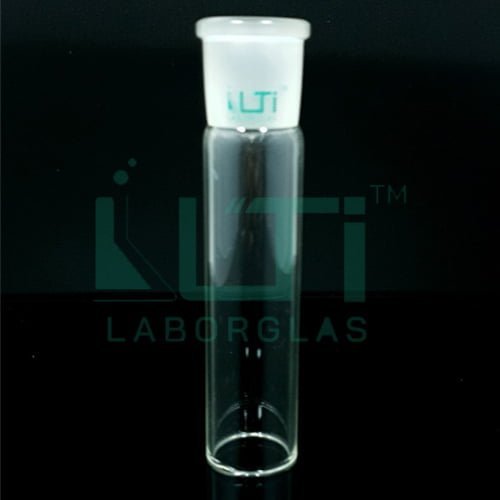
1080-ASTM MEDIUM LENGTH FEMALE INTERCHANGEABLE TAPER-GROUND JOINTS SINGLE
As per ASTM standards E – 676

As per ASTM standards E – 676
| Part No. | Female Joint | Approx. O.D. of Tube (mm) | Total Length (mm) | Pack QTY. |
| 1080-12F | 12/30 | 16 | 120±10 | 10 |
| 1080-14F | 14/20 | 18 | 120±10 | 10 |
| 1080-19F | 19/22 | 22 | 120±10 | 10 |
| 1080-24F | 24/25 | 28 | 125±10 | 10 |
| 1080-29F | 29/26 | 32 | 135±15 | 10 |
| 1080-34F | 34/28 | 38 | 135±15 | 10 |
| 1080-40F | 40/35 | 50 | 150±15 | 10 |
Here are some common uses for such joints in laboratory settings:
- Chemical Synthesis: These joints are commonly used in chemical synthesis setups where different glassware components need to be connected securely for reactions, distillations, or other chemical processes.
- Distillation and Fractionation: In distillation and fractionation apparatus, these joints are employed to connect components such as distillation columns, condensers, and receiving flasks, ensuring a tight seal to maintain the desired conditions.
- Laboratory Glassware Assembly: Researchers often assemble custom glassware setups for specific experiments. Medium-length female interchangeable joints allow for the flexibility to connect and disconnect various glass components easily.
- Vacuum Systems: These joints are crucial in vacuum applications where a reliable seal is necessary. Vacuum filtration setups, rotary evaporators, or other vacuum-based processes benefit from the use of these joints to maintain a vacuum-tight connection.
- Research and Development: Laboratories involved in research and development activities may use these joints for prototyping and testing new equipment. The interchangeability of the joints allows for experimentation and modification of configurations.
- Educational Laboratories: In educational laboratories, these joints are commonly used for teaching purposes, as they allow students to assemble and disassemble glassware setups for various experiments and demonstrations.
- Analytical Instrumentation: Some laboratory instruments and analytical setups may use these joints for connecting different components, ensuring precision and reliability in analytical techniques.


Reviews
There are no reviews yet.