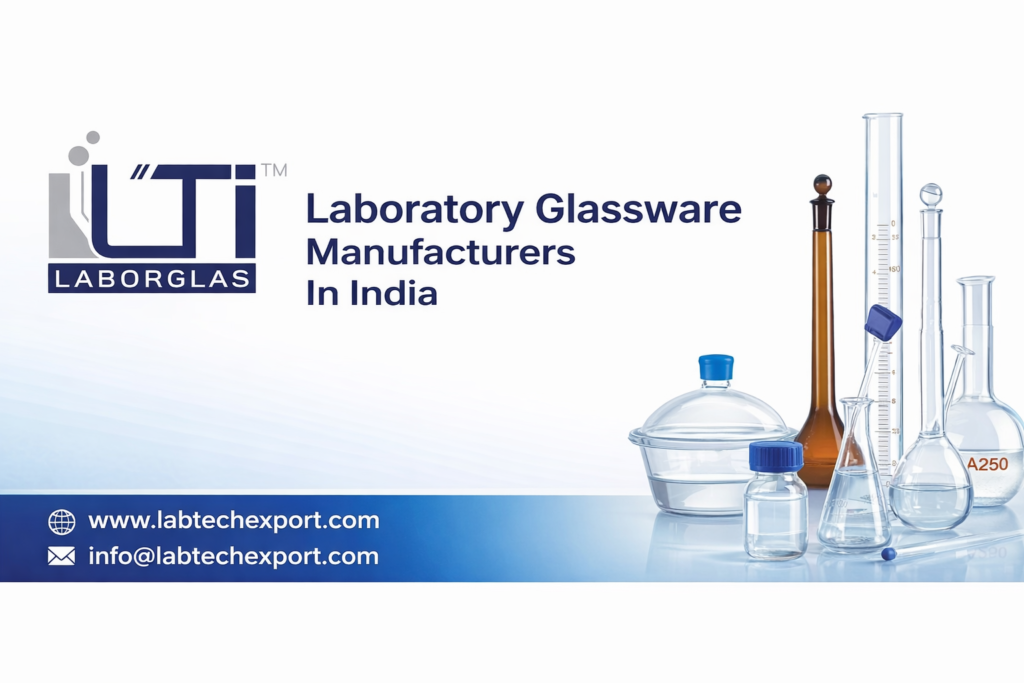
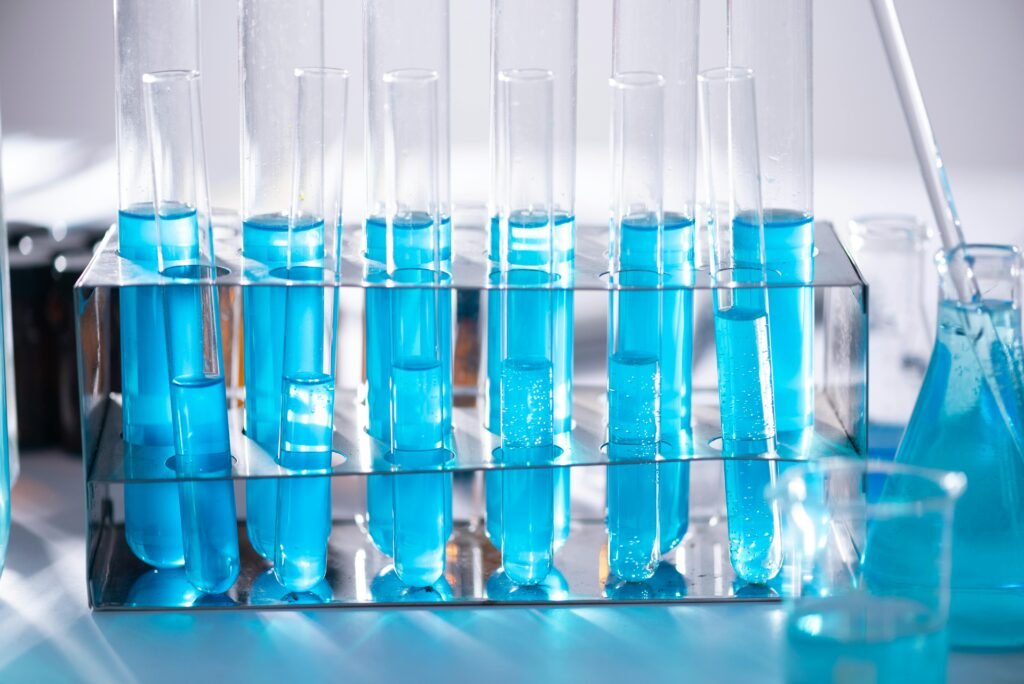
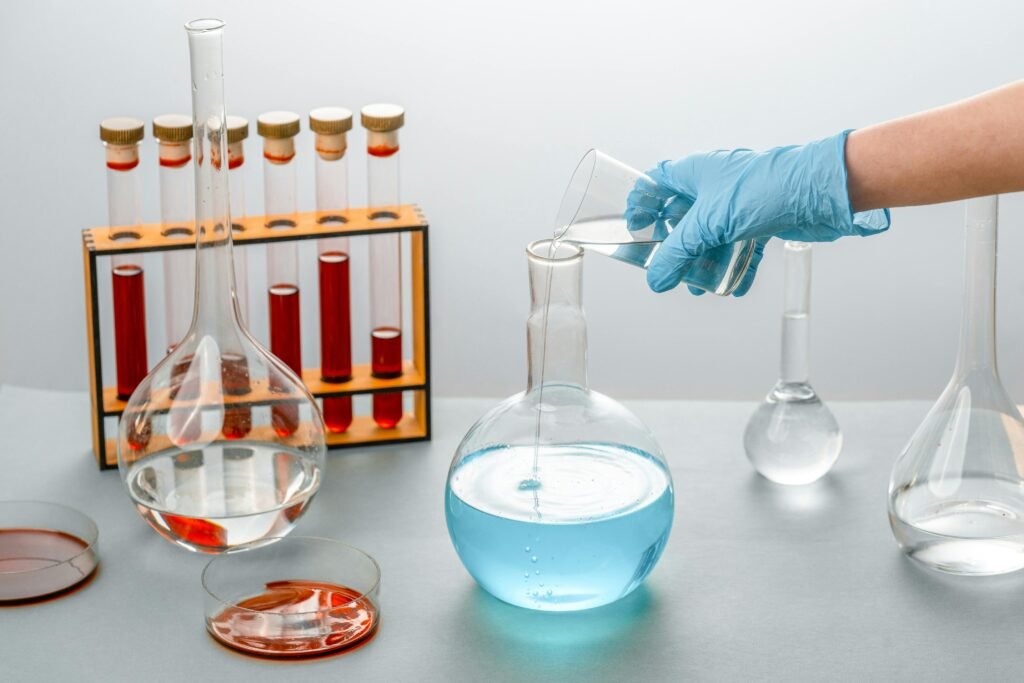
What is Laboratory Glassware “Laboratory glassware” refers to a variety of containers, instruments, and accessories, usually made of glass (often borosilicate glass), used in chemistry, biology, physics and other scientific labs. It is designed to resist chemical attack, temperature changes, and to provide precision or safety depending on the use. Lab‑Tech International is one of the companies that manufactures a broad range of such laboratory glassware and lab instruments, supplying educational institutions, research labs, pharmaceutical companies and so on. Lab‑Tech International Founded in 2010 by Mr. Yogesh Chauhan in Ambala Cantt, Haryana, India. They produce and export a comprehensive range of lab glassware. This includes volumetric glassware, reagent bottles, beakers, test tubes, petri dishes, etc. Their quality systems are certified (ISO 9001:2015). They cater to high schools, universities, engineering colleges, research centers, pharma and R&D industries. Common Types of Lab Glassware — Names, Shapes, Uses Below is a list of many of the common (and some less common) types of glassware, their features, and primary uses in labs. Name Description / Features Typical Uses Beaker Straight sides, flat bottom, often a spout for pouring. Available in many sizes. Mixing, stirring, heating liquids, rough measurements. Useful when precision is less critical. Conical Flask / Erlenmeyer Flask Conical body, narrow neck, flat base. Minimizes spillage when mixing, aids swirling. Titration, culturing microbes, reactions where splashing must be prevented, heating with less loss of vapour. Round Bottom Flask Spherical or semi‑spherical bottom, narrow neck. Often used with heating mantles or in distillation apparatus. Distillations, reflux, heating (because round bottom distributes heat more evenly) Volumetric Flask Flat bottom, long narrow neck with one calibration mark. Very precise for making solutions to exact volume. Preparing standard solutions, dilutions, where accuracy in volume is critical. Measuring / Graduated Cylinder Tall cylinder, calibration marks. Less accurate than volumetric flasks but useful for approximate volumes. Measuring liquids, transferring approximate volumes; when exactness isn’t absolutely crucial. Test Tube Open at one end, closed at the other (rounded or flat bottom), various sizes. Small‐scale reactions, culturing, heating small amounts, qualitative testing. Reagent Bottle / Media Bottle Glass bottles with stoppers or caps, sometimes tinted (amber) for light‑sensitive reagents. Storage of chemicals (liquids, powders), media, reagents; protecting them from light or contamination. Glass Funnel Cone shaped with a stem; several types (simple funnel, Büchner funnel, separatory funnel). Transferring liquids, filtration (with filter paper or vacuum), separating immiscible liquids. Burette Long narrow tube with stopcock at bottom; graduation marks. Titration: delivering reagent drop by drop in a controlled manner. Pipette Many forms: volumetric pipette, graduated pipette, micropipette. Very precise for small volumes. Drawing up and dispensing small volumes accurately in analyses, standard solutions etc. Crystallizing / Evaporating Dishes Shallow dishes; wide surface area. Evaporation of solvents, crystallization of dissolved substances. Desiccator Sealed container, often thick glass, with desiccant inside. Keeping substances dry; storing hygroscopic materials; removing moisture. Condensers / Coolers Tubular structures, often with an outer jacket for cooling water. Condensing vapors during distillation, reflux (bringing vapors back to liquids). Properties of Good Laboratory Glassware To do their job safely and effectively, glassware must often have the following: Chemical resistance, especially to acids, bases, solvents. Thermal shock resistance — ability to endure heating & cooling without cracking. Borosilicate glass is very common because it has low expansion, so less stress under temperature changes. Wikipedia+1 Precision in measurements — glassware such as volumetric flasks, burettes, pipettes need accurate calibration. Good finish — smooth joints, properly ground surfaces, standardized sizes. Safety considerations — stoppers, caps, and closures, flared lips for pouring, etc. Lab‑Tech International’s Role & Quality in Glassware Making Given the general requirements for lab glassware, here is how Lab‑Tech International meets them, based on what is known: They manufacture borosilicate laboratory glassware, which is suited for heat & chemical resistance. They supply both general lab equipment and more precise volumetric pieces (volumetric glassware, etc.). Certified quality systems (ISO) help ensure consistency. They also produce accessories and ancillary glass parts: stoppers, adapters, joints, etc. These are important for connecting glassware in more complex assemblies (e.g. for filtration, distillation). Tips on Choosing and Using Glassware in the Lab Select glassware suited to the task: For example, don’t use a beaker when you need precise volume; don’t use ordinary glass when you need thermal stress resistance. Inspect glassware before use: check for chips, cracks, imperfections. Even small flaws can cause breaks under thermal or mechanical stress. Ensure clean, contaminant‑free glassware: Residues may interfere with reactions or analyses. Proper calibration: Make sure that volumetric flasks, pipettes, burettes are certified and usable. Storage & maintenance: Use appropriate stoppers/caps, store bottles properly; when glassware is custom or with joints, ensure the ground glass surfaces are protected. Safety during heating: Use tongs or clamps, avoid rapid temperature changes; use heat‐proof glass where needed. Manufacturers like Lab‑Tech International play a key role in supplying high‑quality standard glassware, ensuring precision, durability, and safety. Knowing what each type is and how to use it properly is essential for accurate, reproducible, and safe work in the lab.