+91 98020 13010

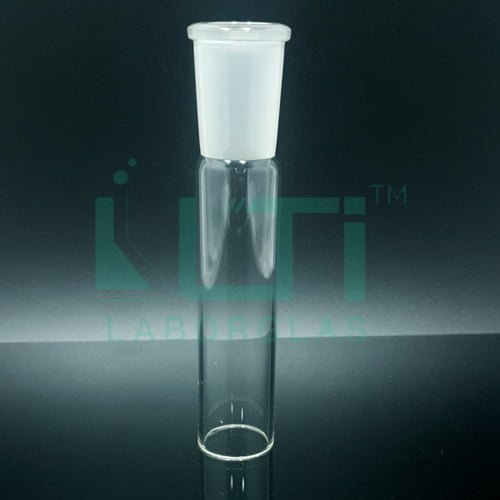
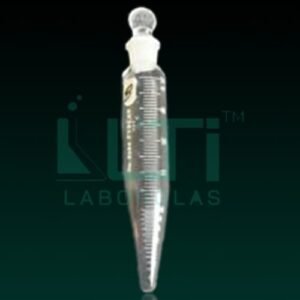
1070-ASTM FULL LENGTH FEMALE INTERCHANGEABLE TAPER-GROUND JOINTS SINGLE
As per ASTM standards E – 676

As per ASTM standards E – 676
| Part No. | Female Joint | Approx. O.D. of Tube (mm) | Total Length (mm) | Pack QTY. |
| 1070-12F | 12/30 | 16 | 120±10 | 10 |
| 1070-14F | 14/35 | 18 | 120±10 | 10 |
| 1070-19F | 19/38 | 22 | 120±10 | 10 |
| 1070-24F | 24/40 | 28 | 125±10 | 10 |
| 1070-29F | 29/42 | 32 | 135±15 | 10 |
| 1070-34F | 34/45 | 38 | 135±15 | 10 |
| 1070-45F | 45/50 | 50 | 150±15 | 10 |
Potential Uses in the Laboratory:
- Standardized Laboratory Glassware:
- ASTM standards ensure that the glassware meets specific criteria for quality, dimensions, and interchangeability. This is important for standardization in laboratories.
- Precision Experimentation:
- Taper-ground joints provide a secure and reliable connection between glass components. This is crucial for experiments where airtight or leak-free connections are required.
- Modular Setups:
- The interchangeable nature of the joints allows for flexibility in assembling modular laboratory setups. Researchers can easily swap or replace components as needed.
- Routine Laboratory Procedures:
- Such glassware might be used in routine laboratory procedures where standardized and interchangeable components are advantageous.
- Chemical Synthesis and Analysis:
- Taper-ground joints are commonly used in chemical synthesis and analysis where precise control of reactions and the ability to connect different glassware pieces are essential.



Reviews
There are no reviews yet.