+91 98020 13010

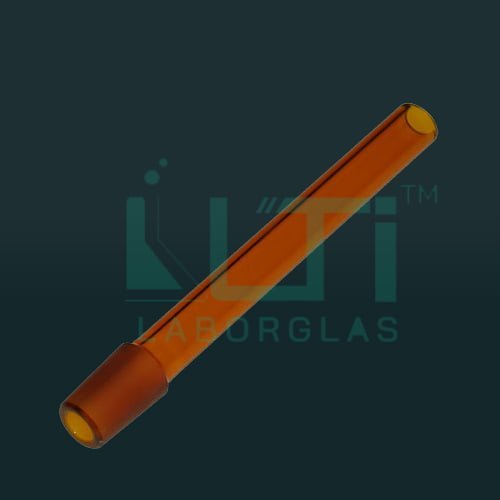
1170-ASTM AMBER MEDIUM LENGTH MALE INTERCHANGEABLE TAPER-GROUND JOINTS SINGLE
As per ASTM standards E – 676

As per ASTM standards E – 676
| Part No. | Male Joint | Approx. O.D. of Tube (mm) | Total Length (mm) | Pack QTY. |
| 1170-12M | 12/30 | 10 | 120±10 | 10 |
| 1170-14M | 14/10 | 13 | 120±10 | 10 |
| 1170-19M | 19/10 | 16 | 120±10 | 10 |
| 1170-24M | 24/12 | 22 | 125±10 | 10 |
| 1170-29M | 29/12 | 26 | 135±15 | 10 |
| 1170-34M | 34/12 | 30 | 135±15 | 10 |
| 1170-40M | 40/12 | 36 | 150±15 | 10 |
| 1170-45M | 45/12 | 40 | 150±15 | 10 |
Here are some potential uses for these joints in a laboratory setting:
- Light-Sensitive Reactions: Amber glass is commonly used in experiments involving light-sensitive chemicals or reactions. Medium-length male interchangeable joints can be used to construct glassware setups for reactions that require protection from light.
- Photosensitive Compounds: Laboratories working with photosensitive compounds or solutions may prefer amber glassware to minimize the effects of light exposure. The medium-length design provides a balance between stability and flexibility in glassware setups.
- Sample Storage: Medium-length amber glass joints can be used in the construction of glassware systems for the storage of light-sensitive samples. The interchangeability of the joints allows for flexibility in designing storage setups.
- Chemical Compatibility: Amber glass is often chosen for its resistance to certain chemicals. These joints may be used in laboratory setups where chemical compatibility is a consideration.
- Distinctive Identification: The amber color serves as a visual identifier for specific glassware or experiments. This can be particularly useful in a laboratory with multiple setups or when working in a shared space.
- Specialized Experiments: In cases where researchers are conducting specialized experiments that involve specific environmental conditions, such as light sensitivity, the use of amber glass may be essential.
- Educational Demonstrations: Amber glassware, including medium-length male interchangeable joints, can be used in educational laboratories for demonstrations to teach students about light-sensitive reactions or the importance of material selection in experimental design.


Reviews
There are no reviews yet.