+91 98020 13010

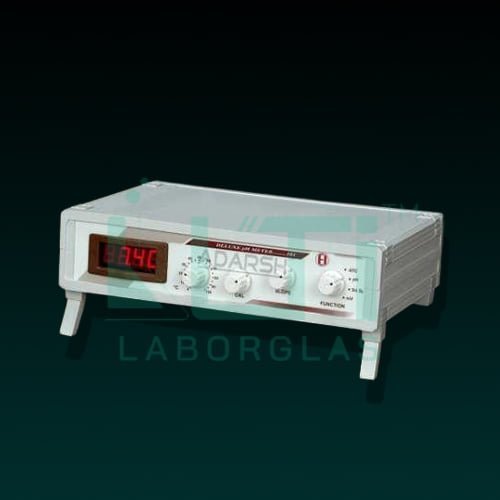
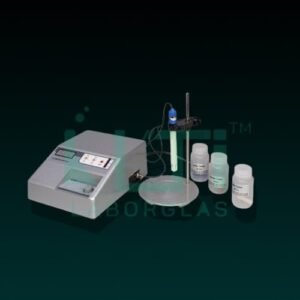
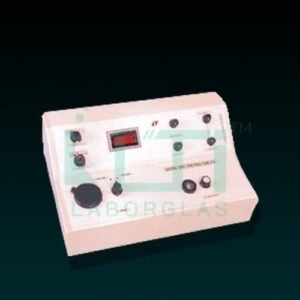
12720-DIGITAL PH METERS
Features:
- Measures pH & mV
- Highly Stable and Accurate
- Auto Temperature Compensation Facility
- 3 ½ digit LED Display
- Auto Polarity & Decimal Indication
- Battery & Mains Operated Available
- Slope Control
- Rugged and Reliable design
- Highly Stable and Accurate
- ATC Facility (101)
- Slope Control

Features:
- Measures pH & mV
- Highly Stable and Accurate
- Auto Temperature Compensation Facility
- 3 ½ digit LED Display
- Auto Polarity & Decimal Indication
- Battery & Mains Operated Available
- Slope Control
- Rugged and Reliable design
- Highly Stable and Accurate
- ATC Facility (101)
- Slope Control
Specifications:
| DISPLAY | 3 ½ Digit LED | |||
|
0 to 14.00
0 to ± 1999 |
|||
|
0.01
1 |
|||
|
± 0.01 pH
± 1 digit |
|||
| TEMPERATURE
COMPENSATION |
Auto: 0 to 100o C
Manual : 0 to 100o |
|||
| INPUT IMPEDANCE | > 1012 ohms | |||
| WEIGHT | 2.5 kg | |||
| SLOPE CONTROL | 80 to 120% | |||
| RECORDER OUTPUT | 0 to 10 mV/pH
0to 10 mV/ 100mV Adjustable |
|||
| POWER | 230V ± 10% AC, 50 Hz | |||
| DIMENSIONS | 76 X 275 X 175mm | |||
| SENSOR | Combined pH Electrode | |||
| ACCESSORIES | *Combined pH Electrode *Buffer Tablets 4 pH & 7 pH *Operation Manual *Buffer Bottles (4 & 7pH) *Temp. Prode *Electrode Stand | |||
| OTHER pH METERS | Microprocessor pH Meter, Digital Potentiometer, Digital pH Meter (LCD Based) |
| Part No. | Description |
| 12720 | Digital Ph Meter |
Here’s a brief overview of how digital pH meters work:
- Electrode System:
- A digital pH meter typically consists of a probe or electrode system. The electrode contains a special glass membrane that is sensitive to hydrogen ions (H+). There is also a reference electrode that maintains a stable potential.
- Ion-Selective Electrode (ISE):
- The glass membrane of the pH electrode is an ion-selective electrode, specifically selective to H+ ions. When immersed in a solution, the glass membrane allows H+ ions to pass through, generating a potential difference.
- Reference Electrode:
- The reference electrode provides a stable reference potential against which the potential generated by the ion-selective electrode is measured.
- Potential Difference Measurement:
- The potential difference between the ion-selective electrode and the reference electrode is proportional to the concentration of H+ ions in the solution. This potential difference is converted into a pH value by the pH meter.
- Calibration:
- Digital pH meters need to be calibrated regularly to ensure accurate measurements. Calibration involves adjusting the meter based on known standard solutions with defined pH values. This establishes a reference point for the meter to accurately measure pH in unknown solutions.

Reviews
There are no reviews yet.